
An experiment in visibility

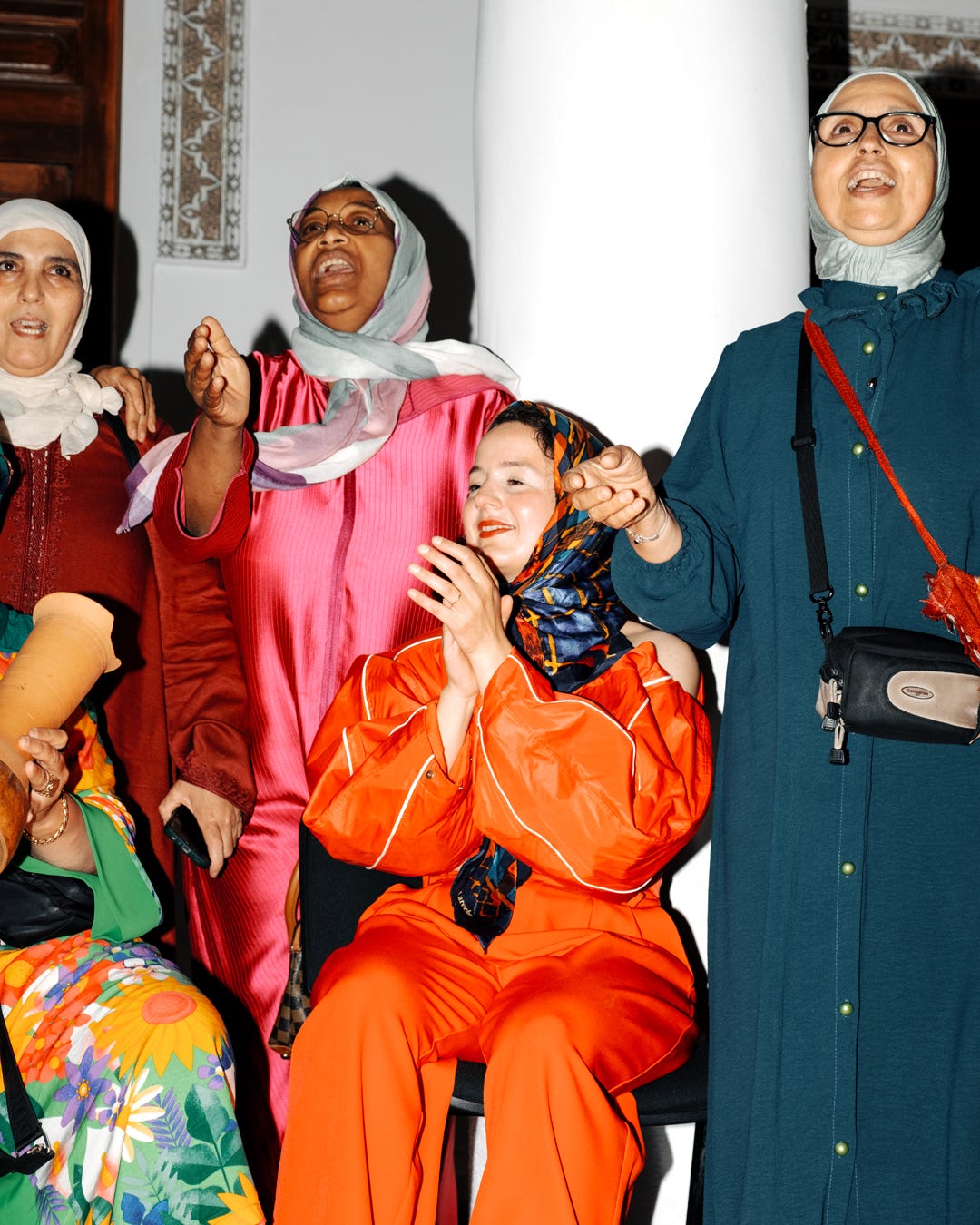
Powerful women’s voices rose through the courtyard of a sunlit riad in Marrakech, echoing off its white plastered walls, soaring upward through the open roof, to join the circling swallows above the medina. They were mothers, radiant in bright djellabas and hijabs, their eyes gleaming with mischief. Their singing didn’t just fill the air, it opened the soul of the house to our music. We were there for the final concert of our Moroccan tour. And while the music was ours, the spirit of the evening belonged to them.
I stood on the rooftop, scarf in hand, hesitating. Until that night, I had never worn a scarf in a traditional way on stage. Looking at a room where roughly 80% of the audience wore hijab, I wondered if I should. It felt like a rare moment of potential safety, in a space where vulnerability might be held rather than exposed.
Belonging is a complicated concept when you’re navigating between worlds. Visibility as a Muslim can create distance in some spaces. Yet choosing what feels true. For me, covering my head as a way to protect my spiritual energy, brings a sense of belonging that comes from inner alignment.
Sometimes I wander through Amsterdam with my scarf tied under my chin, sunglasses shielding my face, an experiment in anonymity, a quiet test of perception. I notice the shift in how I’m seen. That subtle but unmistakable change in how I’m perceived keeps me questioning if I’m ready. A close friend, also navigating her relationship with belief and the hijab, once said:
“It doesn’t have to be all or nothing. Part-time hijab exists. You’re allowed to find your own rhythm with it.”
Her words gave me a kind of grace. A small permission to let go of absolutes and experiment with presence, visibility, meaning.
That night in Marrakech felt like an invitation to do just that. The women in the audience - confident, unshakably themselves - weren’t measuring my authenticity or questioning my choices. They simply welcomed me in.
Since then, I’ve worn a scarf on stages dominated by white audiences. The stage has become a space where my expression is mine, and the gaze of others can’t unseat me. Off stage, under the ordinary lights of daily life, it feels far more vulnerable, like carrying a secret in plain sight.
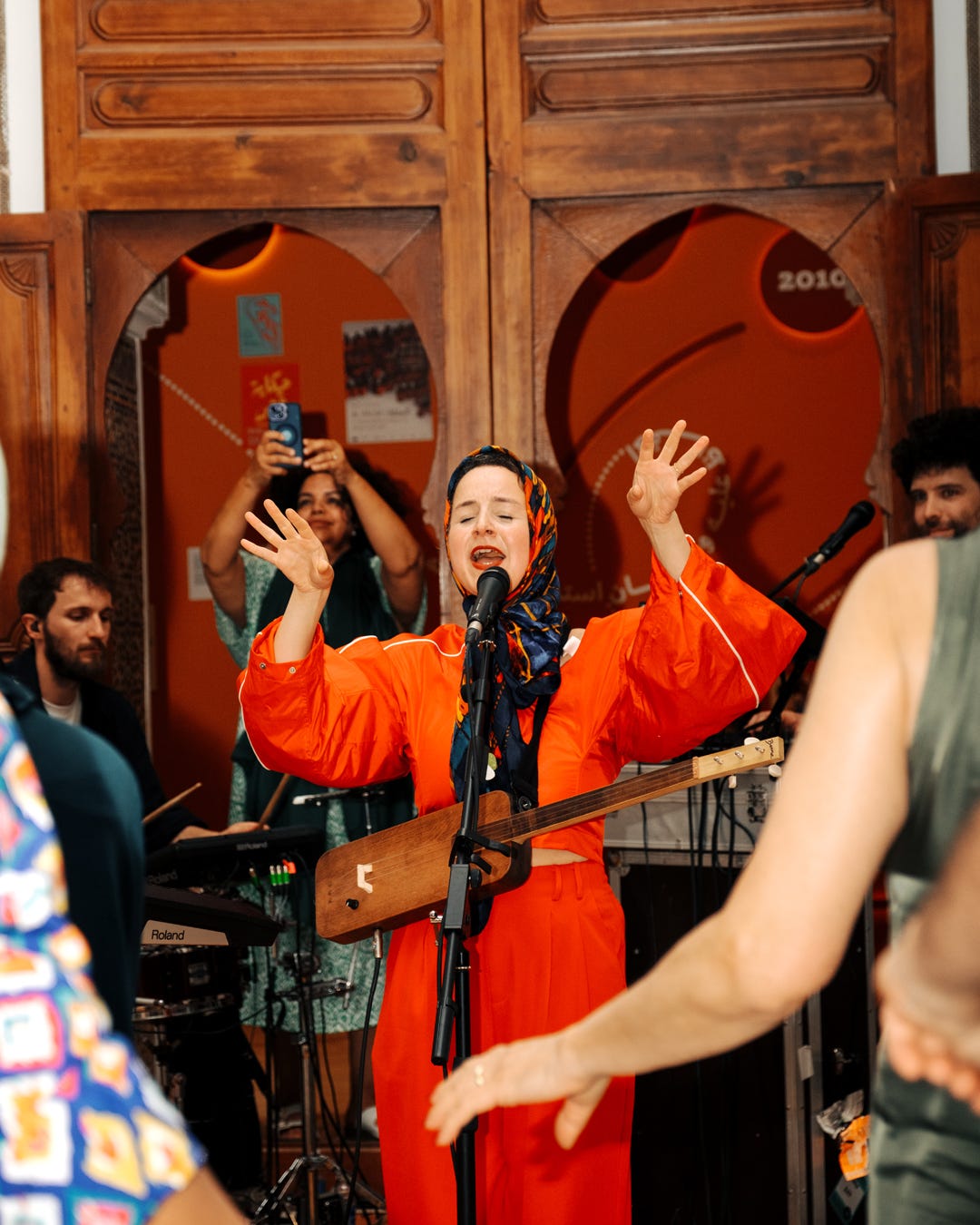
In a controlled environment, whether in the studio or on stage, experimentation in expression is part of the playbook. It’s how I rehearse not to silence the parts of me that feel vulnerable, until I can carry them fully into the everyday. That night in Marrakech I rehearsed breaking with my own biases. The inherited assumptions that wearing a hijab narrowed who I could be.
With those women in the room, mothers, sisters, mirrors of a lineage I belong to, it felt like a coming out, a declaration of self in a world that often weaponizes the choice of visibility. Their embrace turned what could have been a risk into a beginning. One that has carried me forward with a little more certainty each time I step on stage.
Photography by Salaheddine El Bouaachi.